Electric vs Hydraulic fertilizer pumps
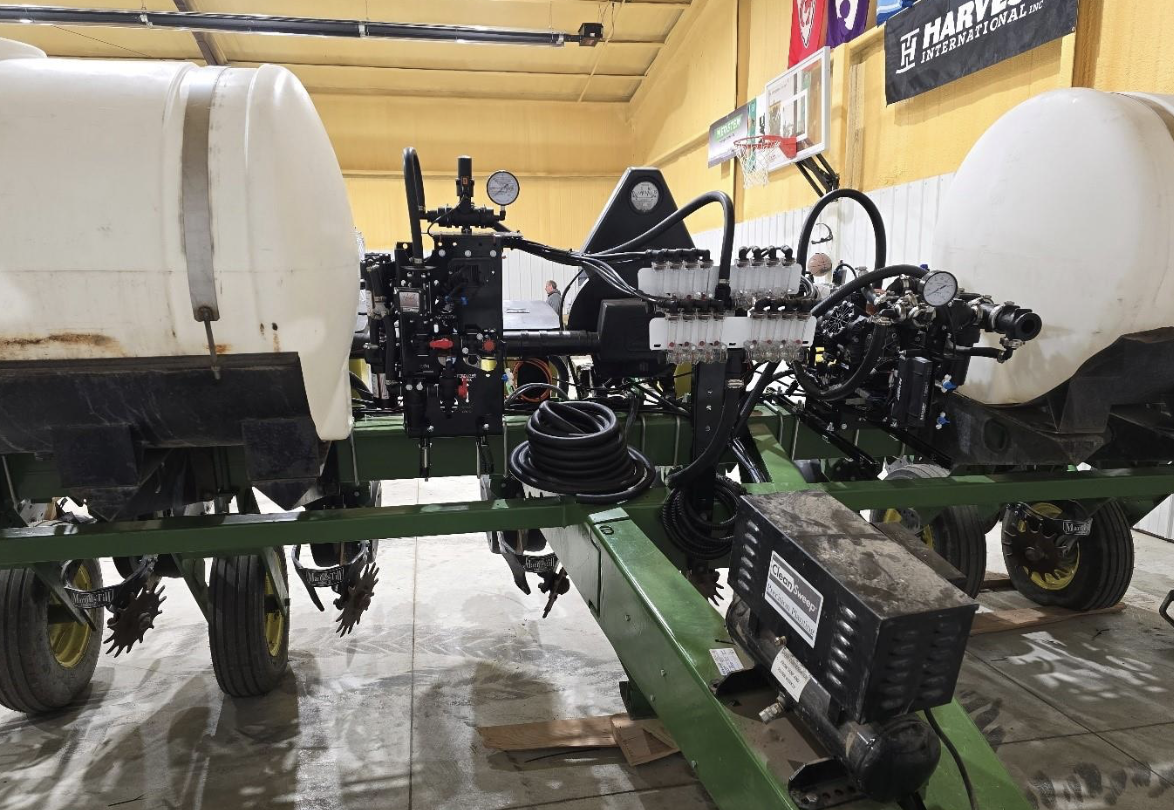
Starting with the GX2 Dual Electric Pump System, the electric pump system thrives on planters that are 40ft or smaller, and for infurrow Starter applications. The electric pumps are an affordable option that achieve the basic need of applying liquid fertilizer accurately at the row. AgXcel uses two 12V diaphragm electric pumps for the GX2 setup. This not only achieves a higher flow rate of up to 5 GPM, but also helps to extend the life span of the electric pumps since the load can now be shared. On top of that, these pumps are positive displacement. That means that for every revolution of the motor, the same amount of liquid is applied, leading to a consistent concentration of fertilizer being applied on each seed in the furrow.
Where the GX2 will start to struggle is when the GX2 electric pump system is expected to be used on a planter that is larger than 40ft wide, such as a 24R 30” planter that is 60ft wide. What can happen is that the rows towards the end of the planter might get starved, meaning that those rows may not get as much flow as the more center rows. Even though the GX2 electric pumps are self priming pumps, it is still highly recommended that the GX2 be mounted close to the tank it is drawing from and should not sit more than 4ft above the bottom of the tank. AgXcel offers several types of mounting brackets to make proper mounting as easy as possible.
What has been done before with great success is if the user wants to apply at a lower flow rate, such as 2 GPA on the larger 60ft planter. Farmers that are using humic products have, for several years, taken advantage of the dual pump GX2 at those lower flow rates on larger planters with success. Saving the farmer money.
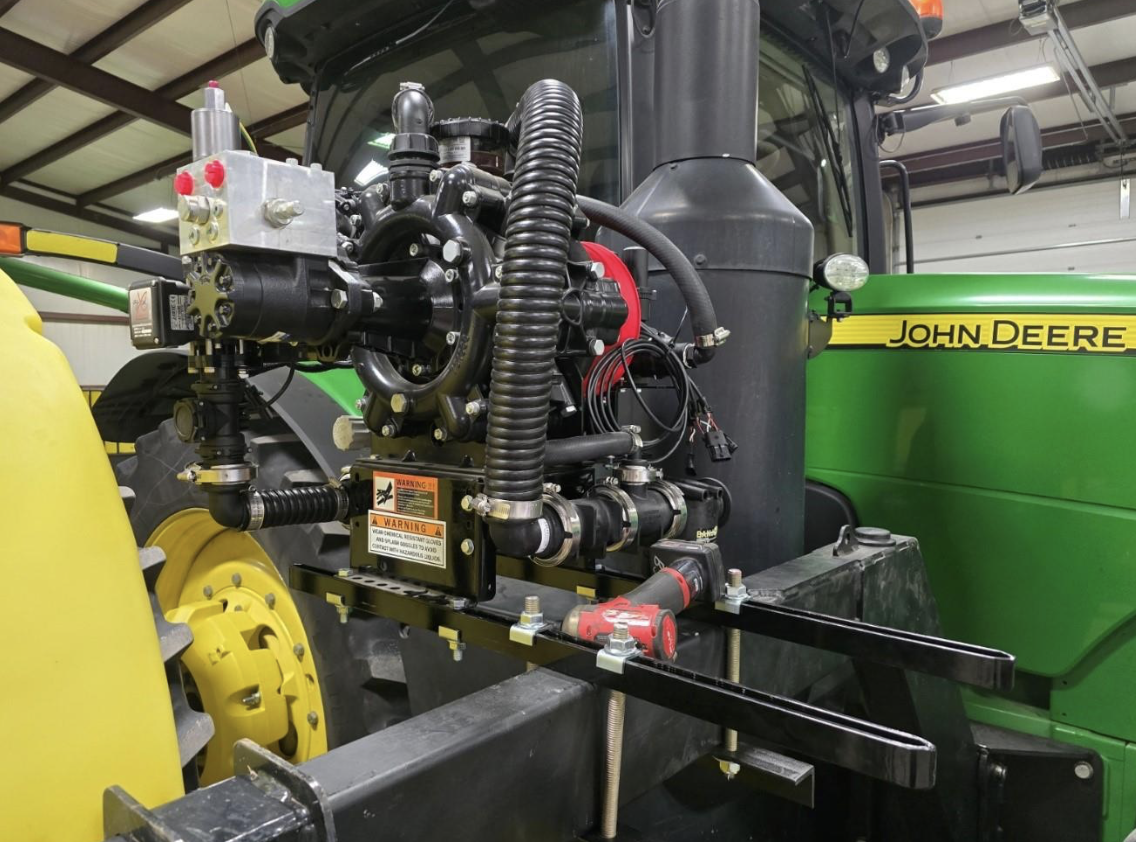
The GX5 Hydraulic Diaphragm Pump System is also a positive displacement pump, providing you with that consistent application rate per revolution. Crucial for infurrow Starter applications to provide the same concentration of fertilizer for each seed, and also a consistent application rate of Nitrogen behind the row.
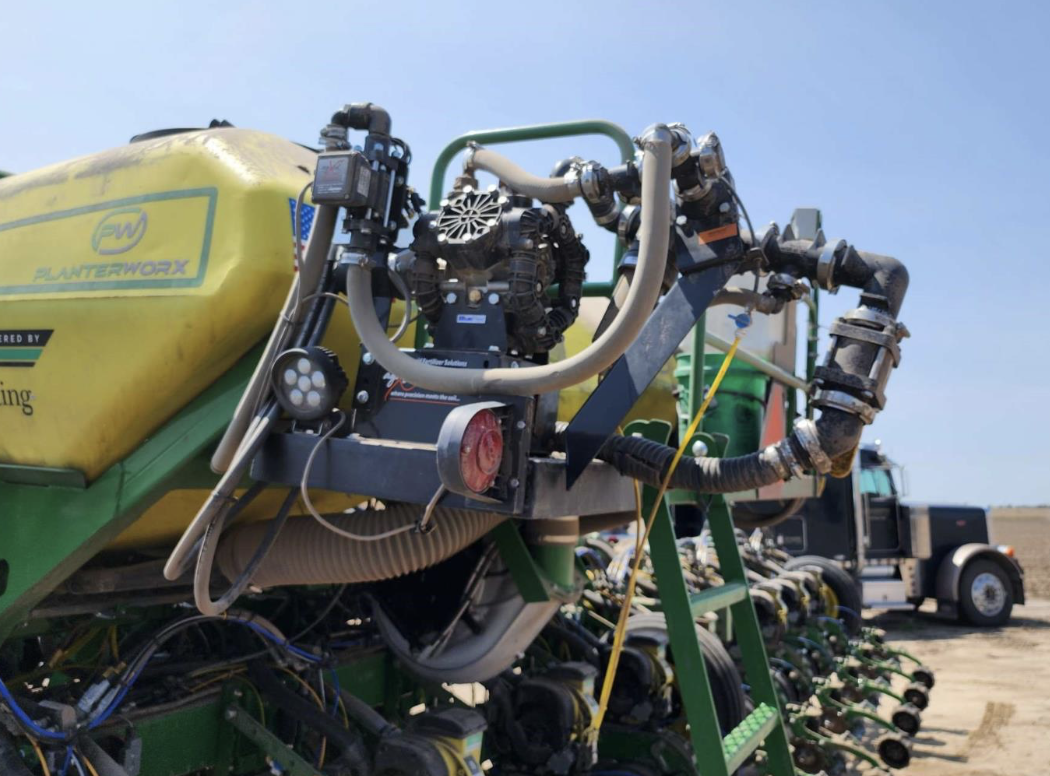
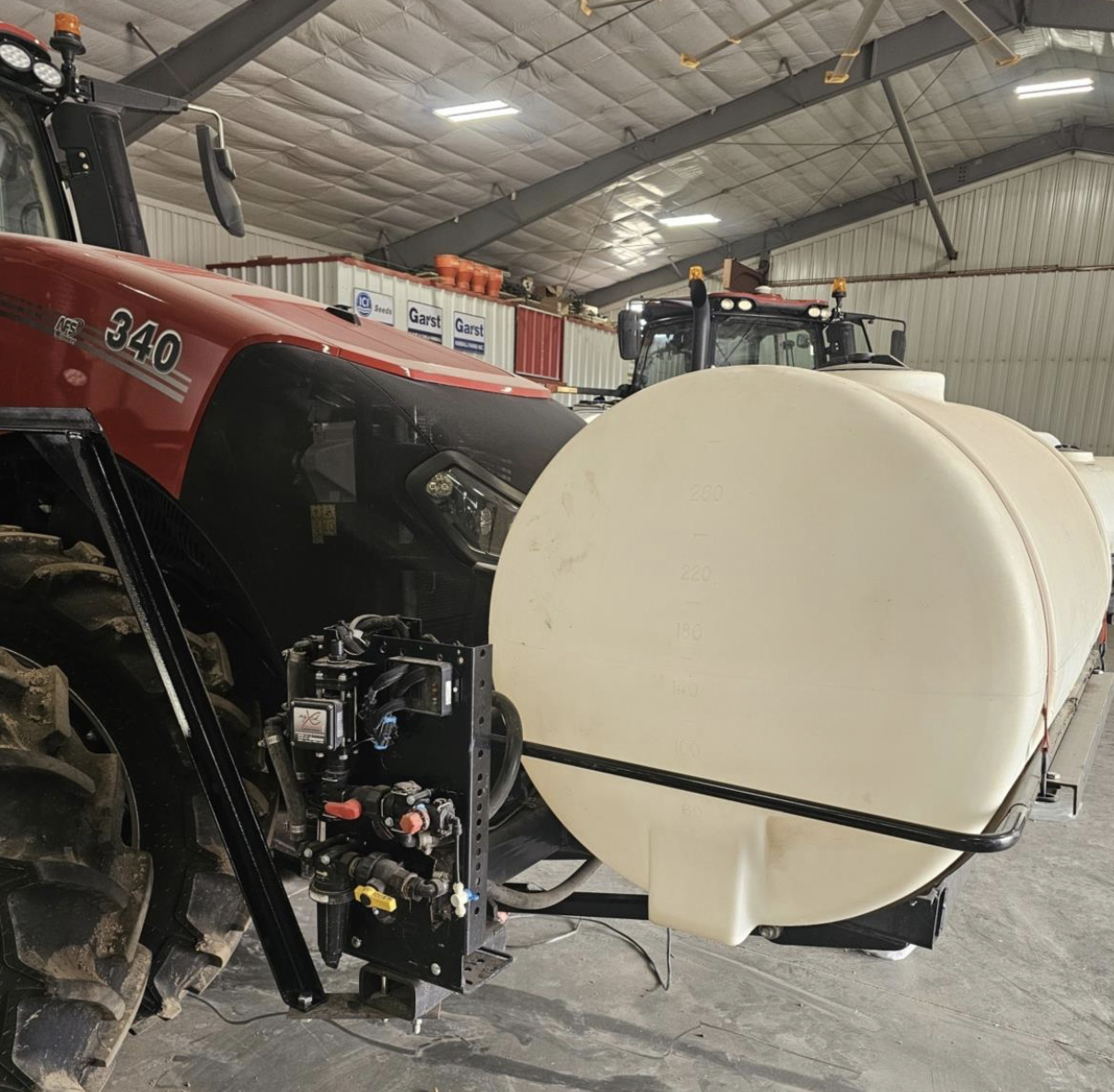
The hydraulic diaphragm pumps are also self priming pumps, meaning that this style of pump can be mounted anywhere, no matter the distance from the tank. We have seen nose tanks on the front of tractors and the GX5 hydraulic diaphragm pumps mounted behind a seed tank on a pull planter, prime in less than two minutes, and hold that prime.
The GX5 hydraulic diaphragm pump can be used on any size planter or toolbar for any flow rate. There is a model pump available for all flow rates and for any mounting scenario.
When using very heavy fertilizers, such as products with sugar or heavy biologicals, the GX5 hydraulic diaphragm pump is recommended over the GX2 electric diaphragm pump, due to the GX5 having the power behind it to move those products efficiently. We’ve seen before where guys have tried to push those kinds of fertilizers with electric pumps, and sometimes they can achieve those rates, but if they try to push their planting speed over 6 MPH, or 10 GPA or more, the pumps just don’t have the power needed to push the product to all of the rows and still achieve the target flow rate.